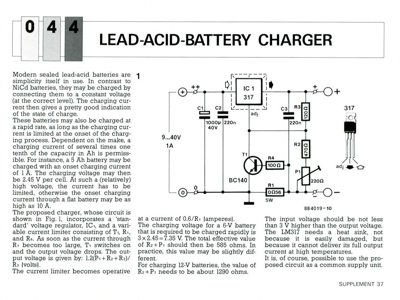
Very discharged lead acid batteries have to be charged with fixed current until they get to a minimum voltage then they can be voltage charged. The coulometric charging efficiency of flooded lead acid batteries is typically 70 meaning that you must put 142 amp hours into the battery for every 100 amp hours you get out.

Charging Information For Lead Acid Batteries Battery
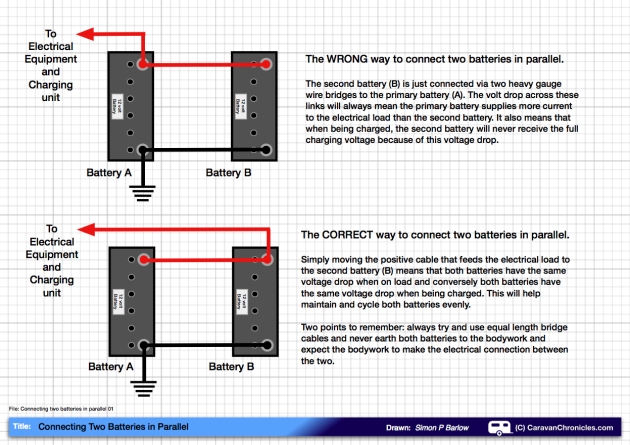
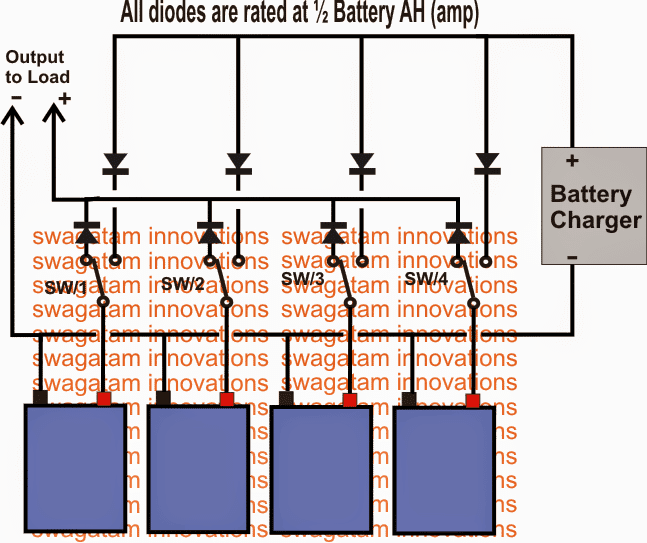
Charging batteries in parallel lead acid. With no resistance to slow this charging process the charged units can overheat as they rapidly drain and the discharged battery can overheat as it attempts to charge at well above its design. Multiply the time anticipated to charge one battery by the total number of batteries. To achieve the criteria for balanced charging you simply need to start one of the charging leads from the opposite direction. In theory it is ok to connect them in parallel with two conditions. For example if charging one battery normally takes three hours and you have five batteries linked in parallel the charging time will be five times three hours or 15 hours. The correct method to charge batteries in parallel balanced charging.
Simple constant current constant voltage chargers will do the job for a while but the battery life expectancy quoted by the manufacturer will be greatly reduced by using non intelligent chargers like this. The lead acid battery uses the constant current constant voltage cccv charge method. This is fine for lead acid batteries unless they are very run down. For secondary rechargeable batteries the stronger battery would charge the weaker one draining itself and wasting energy. In this example each battery will draw current through exactly three interconnecting leads. Each battery must be in a state where it can be voltage charged.
The charge time is 1216 hours and up to 3648 hours for large stationary batteries. Sealed lead acid batteries are widely used but charging them can be a complex process as tony morgan explains. This varies somewhat depending on. Charging sealed lead acid sla batteries does not seem a particularly difficult process but the hard part in charging an sla battery is maximising the battery life. Into account that the battery charging voltage is higher than the battery discharging voltage. If you connect rechargeable batteries in parallel and one is discharged while the others are charged the charged batteries will attempt to charge the discharged battery.
A regulated current raises the terminal voltage until the upper charge voltage limit is reached at which point the current drops due to saturation.
Gallery of Charging Batteries In Parallel Lead Acid