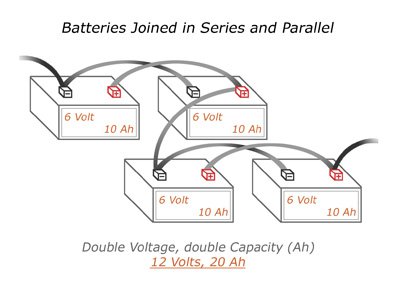
Increasing both voltage and amperage. Connecting batteries of different voltages in parallel primary disposable batteries they are not designed to take a charge and so the lower voltage battery is likely to.
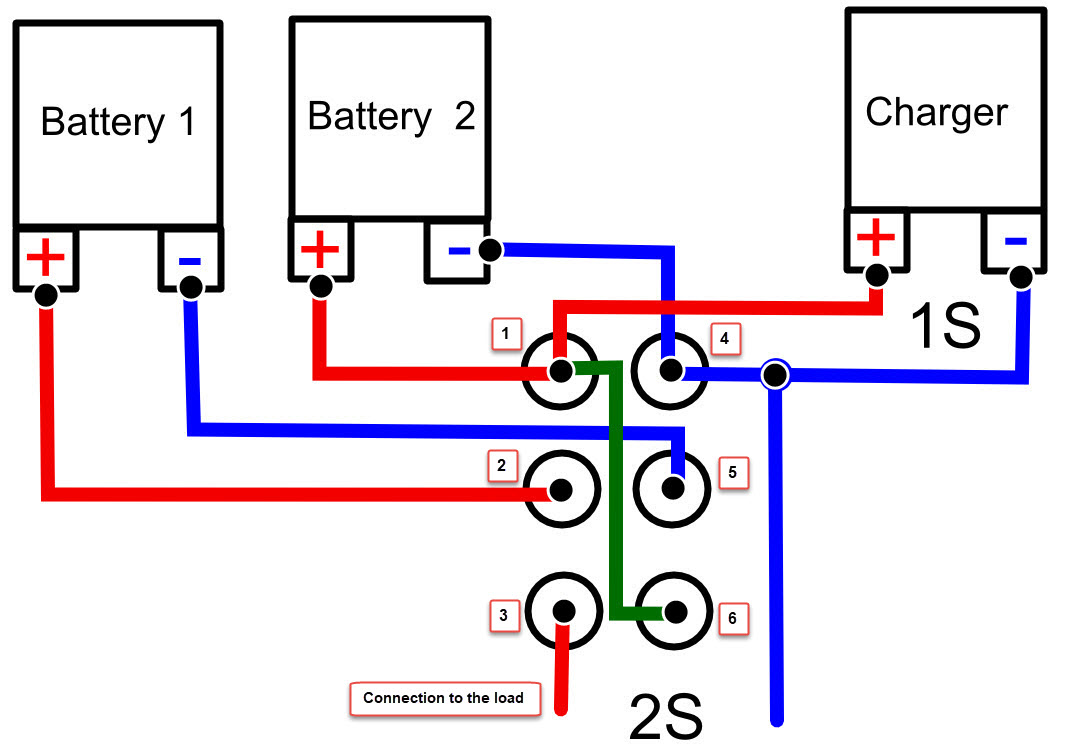
Rv Batteries Wiring Diagrams
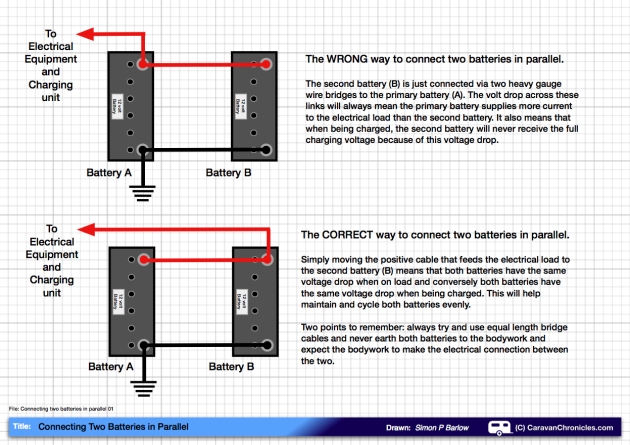
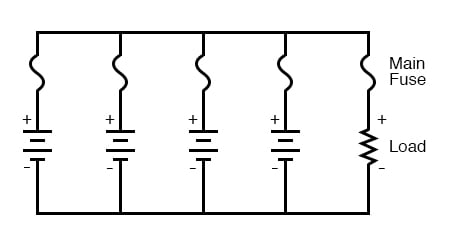
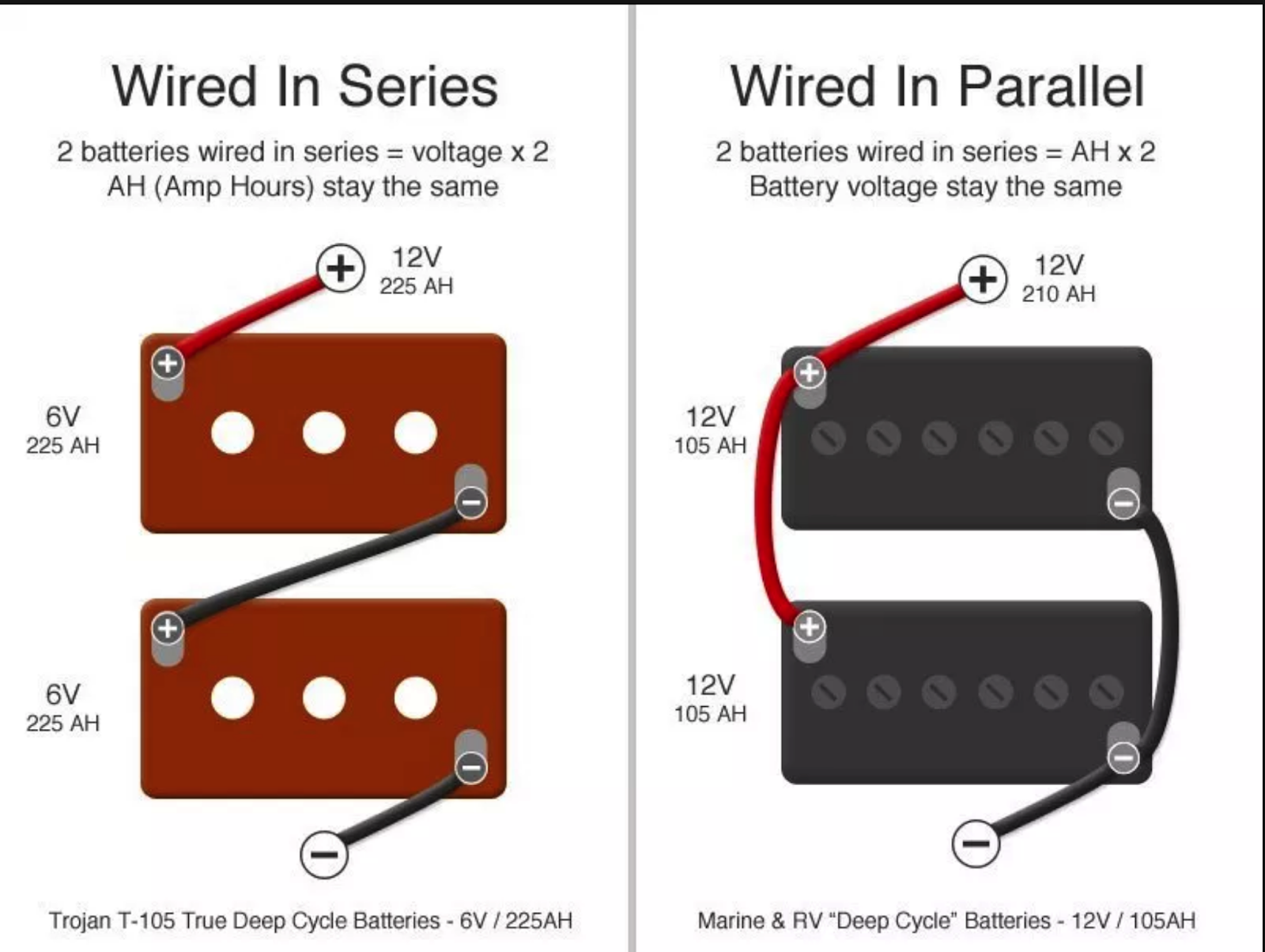
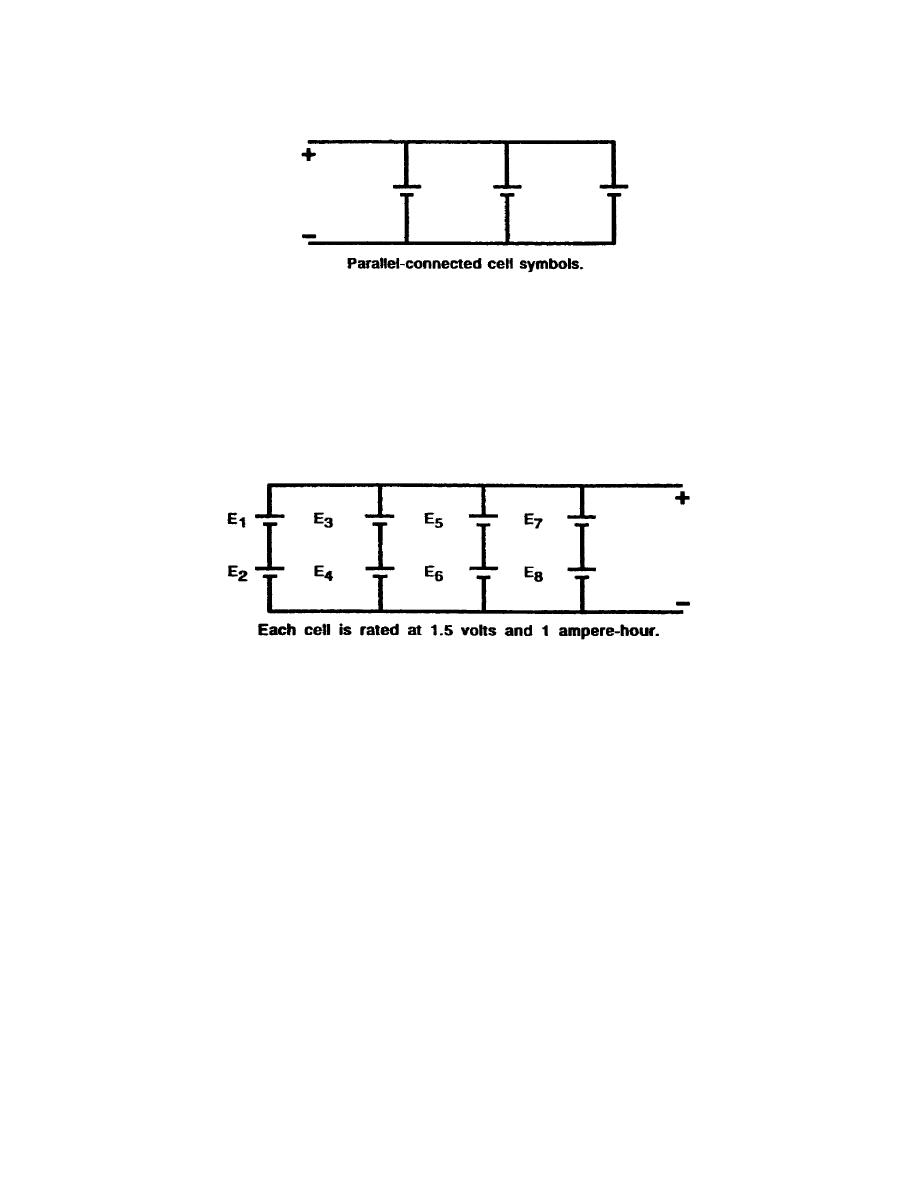
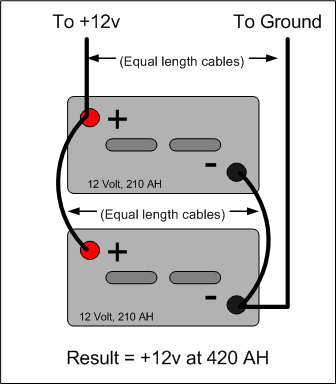
Batteries connected in parallel. For example suppose two batteries of same rating ie. One 12 volt 10ah battery one 12 volt 10ah battery connected in parallel equals 12 volts and 20 amps. 1800 mah 12 v are connected in parallel the output voltage of parallel circuit is remain 12 v butt current capacity becomes 3600 mah. When you connect two batteries in parallel you are able to double the capacity amperage rating while maintaining the same voltage. Batteries that are only in parallel keep the same voltage and increase their capacity. Combining the two provides the best of both worlds.
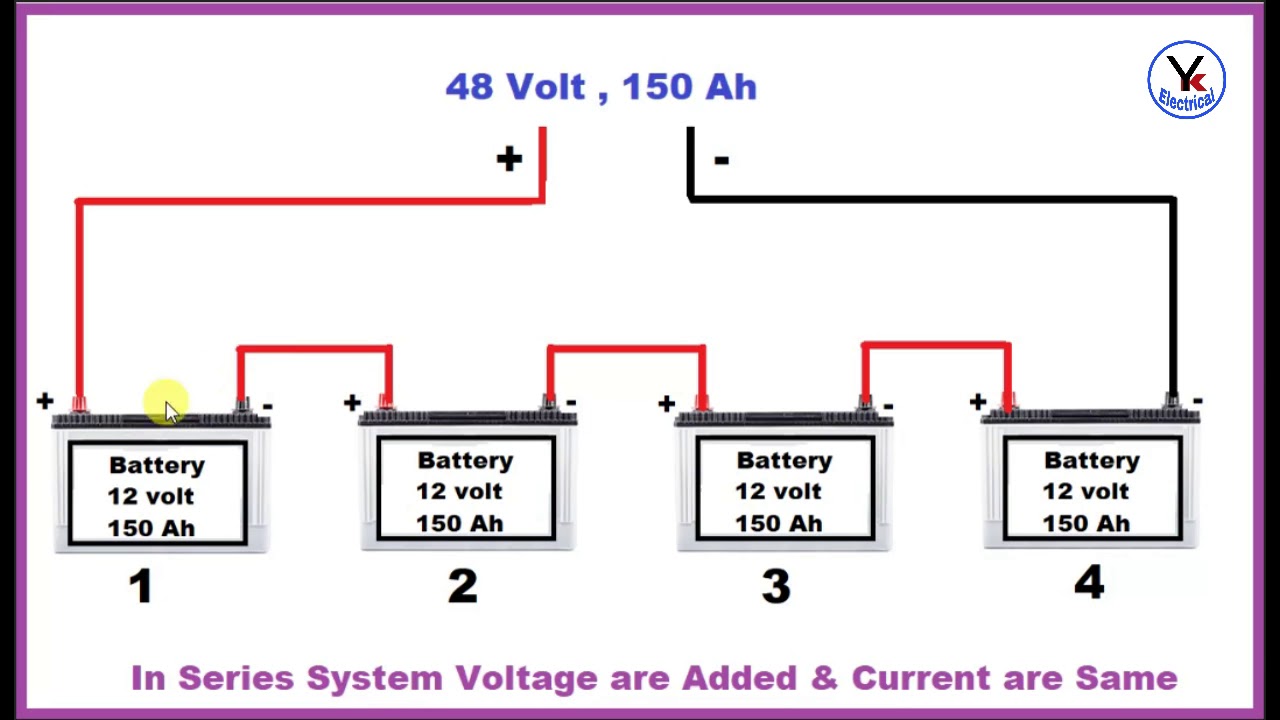
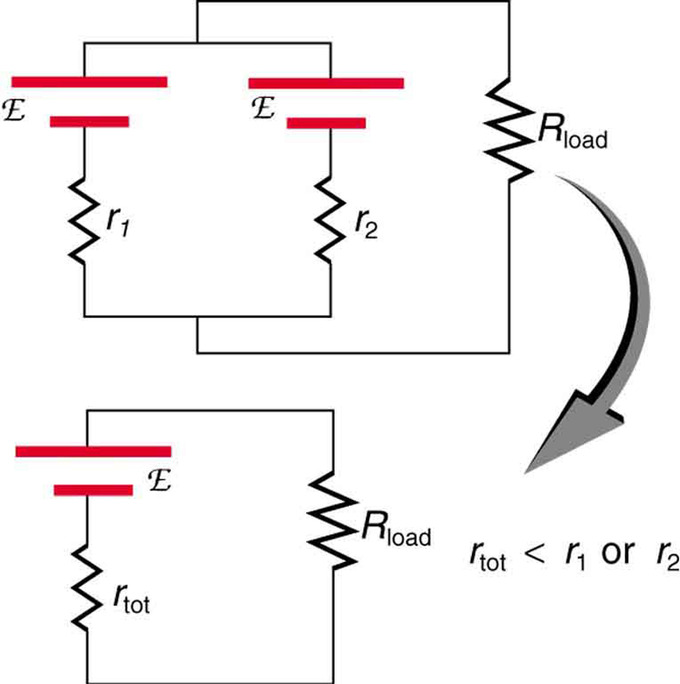
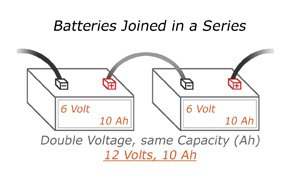
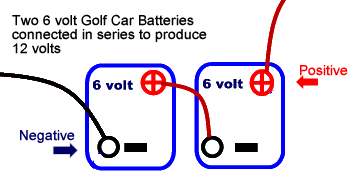
When two identical batteries are connected in parallel it will double the current capacity and the output voltage remains the same as a single battery. My take on it is if two batteries are in parallel and one battery has a cell failure due to plate buckling or collapse the potential of the battery would drop to around 10 volts and the remaining battery in the bank would still have a potential of just over 12 volts so in theory the reverse potential across the failed cell would be just over 2 volts with no charger connected. Batteries that are only in series keep the same capacity and increase their voltage. The lower voltage battery is not designed to. Following this example where there are two 12v 200ah batteries connected in parallel we will therefore have a voltage of 12v volts and a total capacity of 400ah ampere hour. Secondary rechargeable batteries these only fair a little better.
The parallel connection of two identical batteries allows to get twice the capacity of the individual batteries keeping the same rated voltage. One 12 volt 150ah battery one 12 volt 150ah battery wired in parallel equals 12 volts and 300 amps.
Gallery of Batteries Connected In Parallel